
Fred the Turkey’s Bumblefoot needed debridement. By October, she wasn’t limping.
The Case:
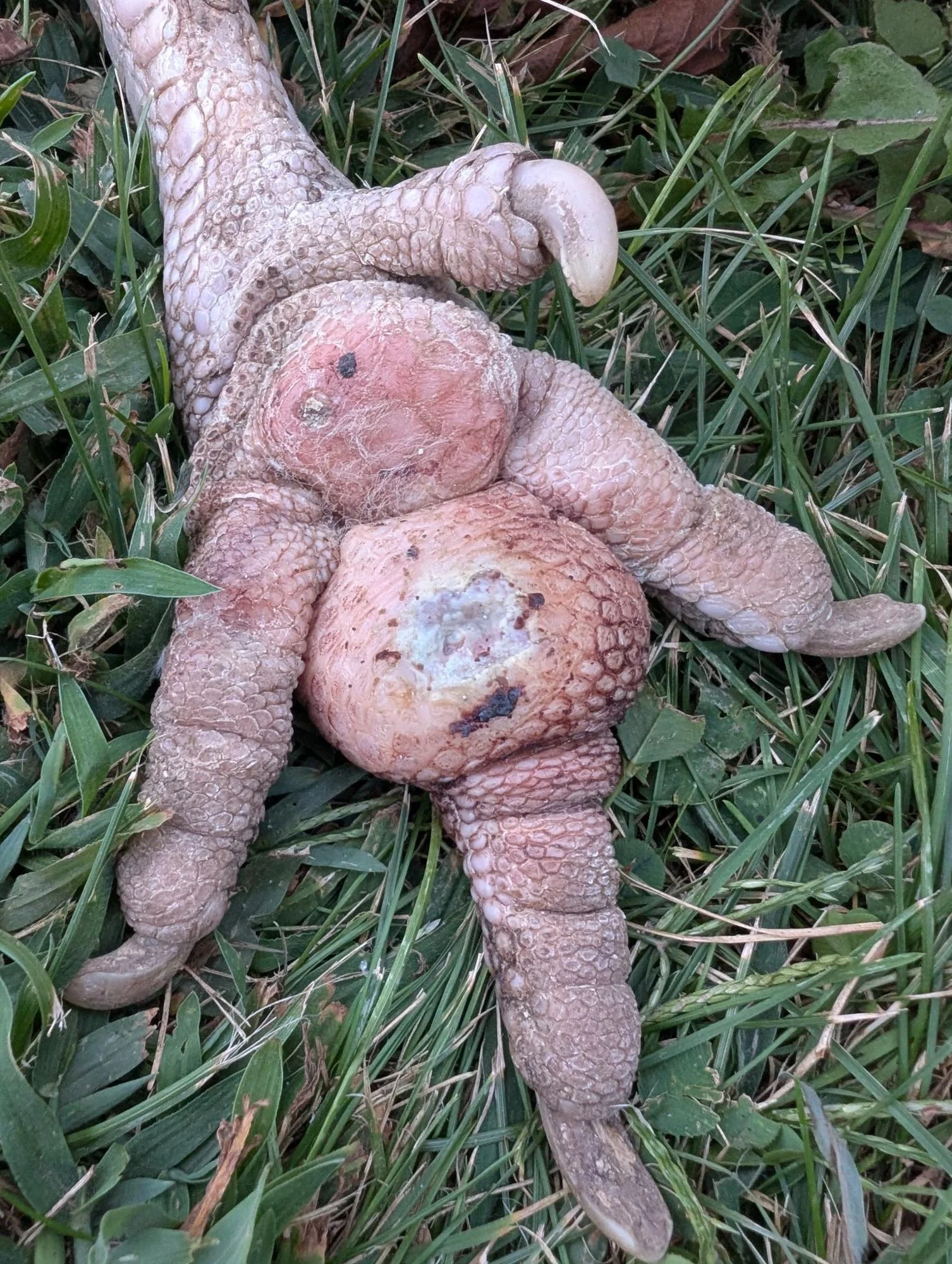
Thanks to Brittany Prior for sharing the photos and story of Deep Fried Fred (the wonder-turkey), her pet turkey and the resident clinic mascot at the hospital she was managing at the time. Fred came in with bumblefoot (plantar pododermatitis) on one foot, with a firm, swollen plantar pad and a dark central lesion. She was debrided on August 21, 2025, and the wound was packed with RediHeal at every bandage change after that.
Testimonial:
(Brit Prior, Fred’s Owner & Veterinary Hospital Manager)
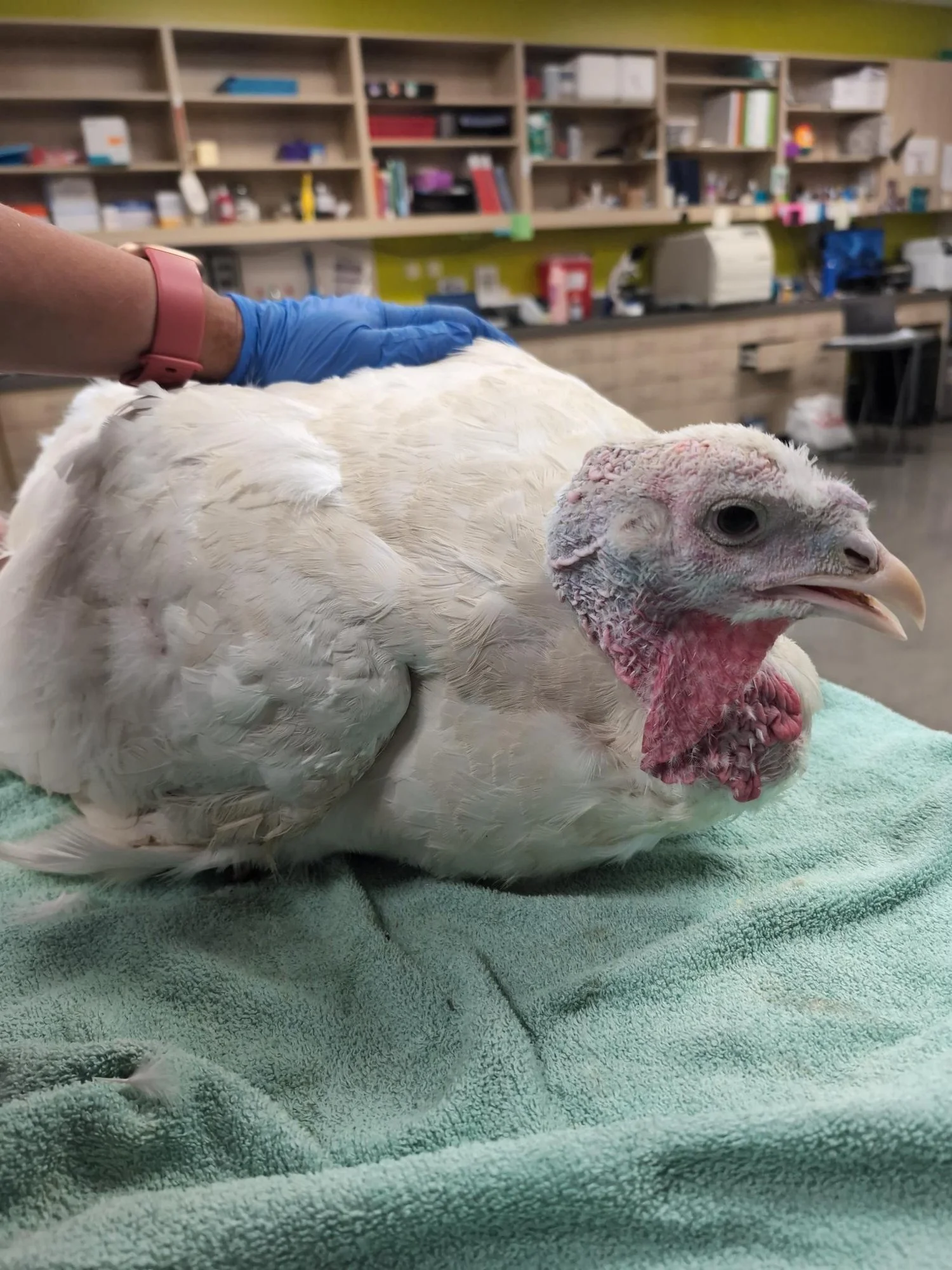
Fred the Turkey, Clinic Mascot and RediHeal Patient
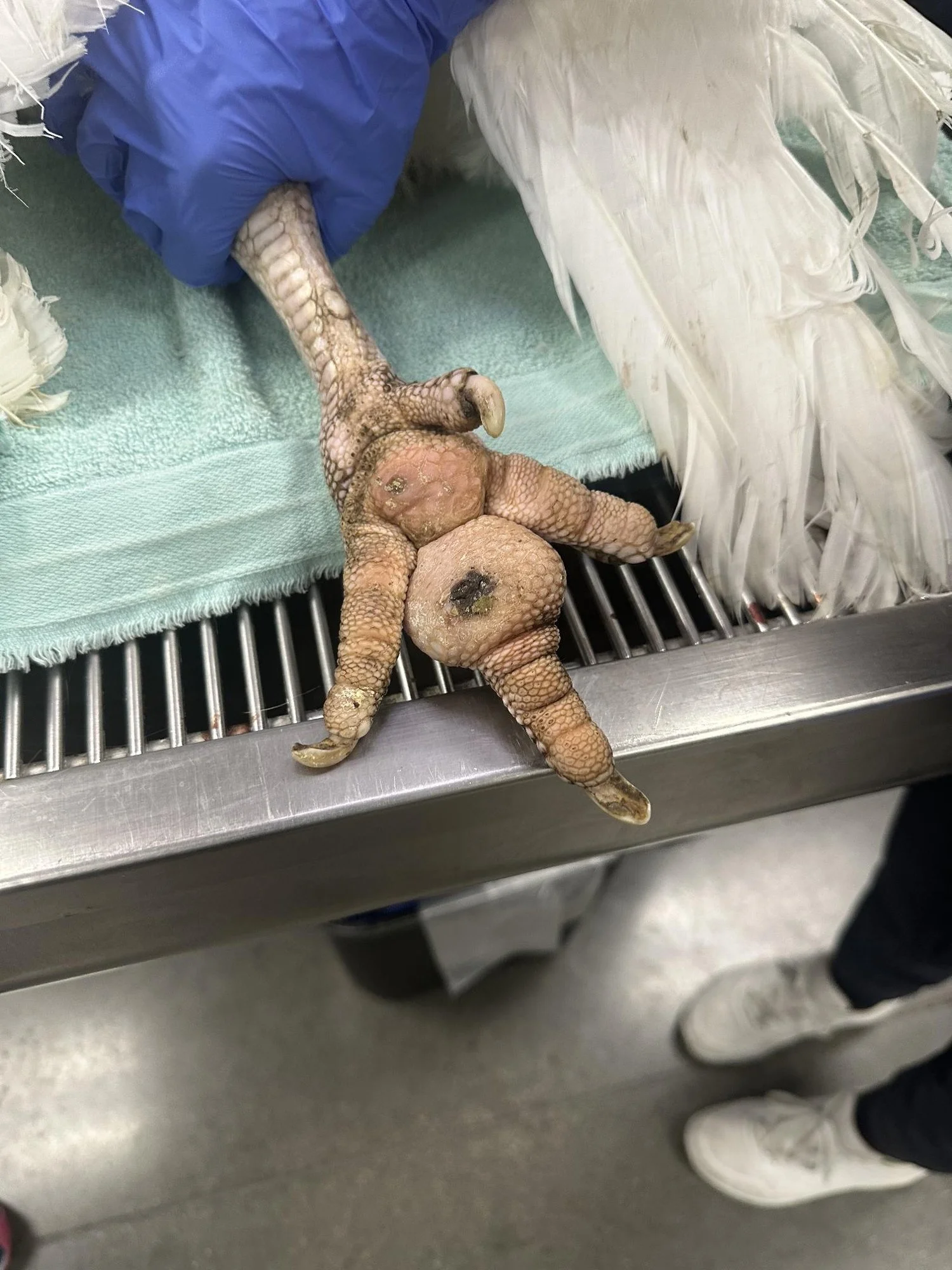
Aug 21: Turkey Bumblefoot before Debridement
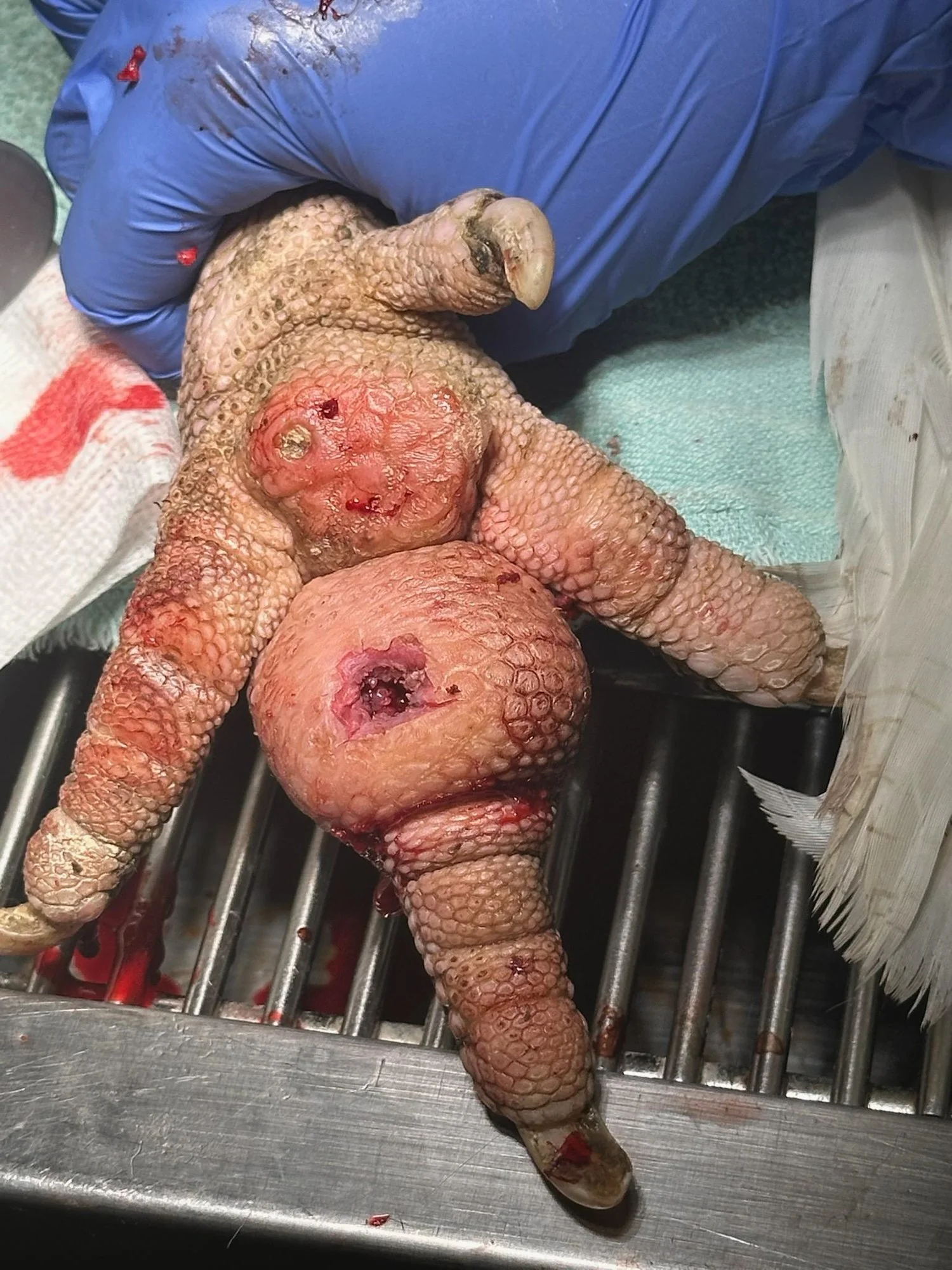
Aug 21: Turkey Bumblefoot after Debridement
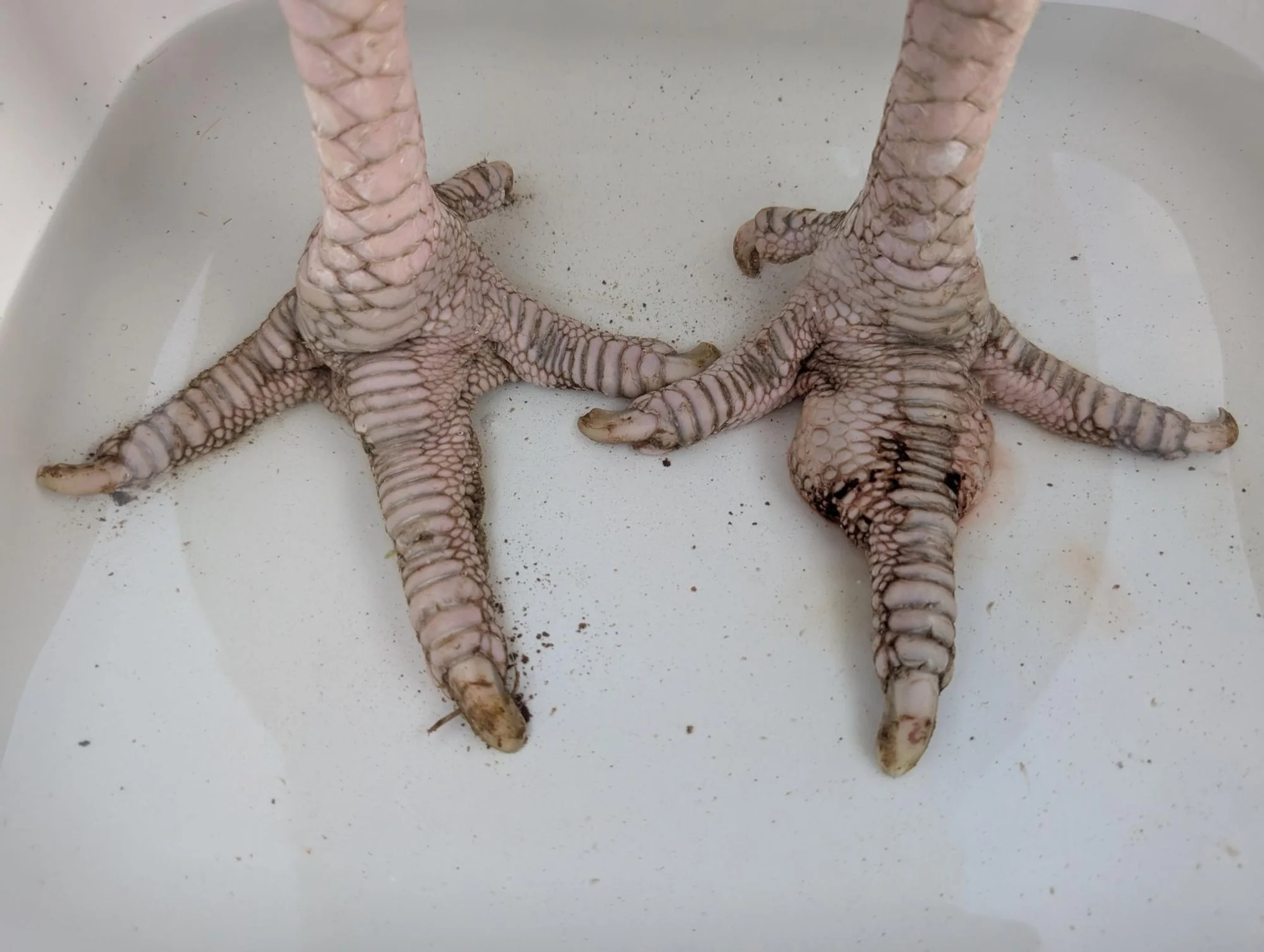
Foot Soak during Bumblefoot Treatment
Aug 22: Turkey Bumblefoot Wound with RediHeal fibers
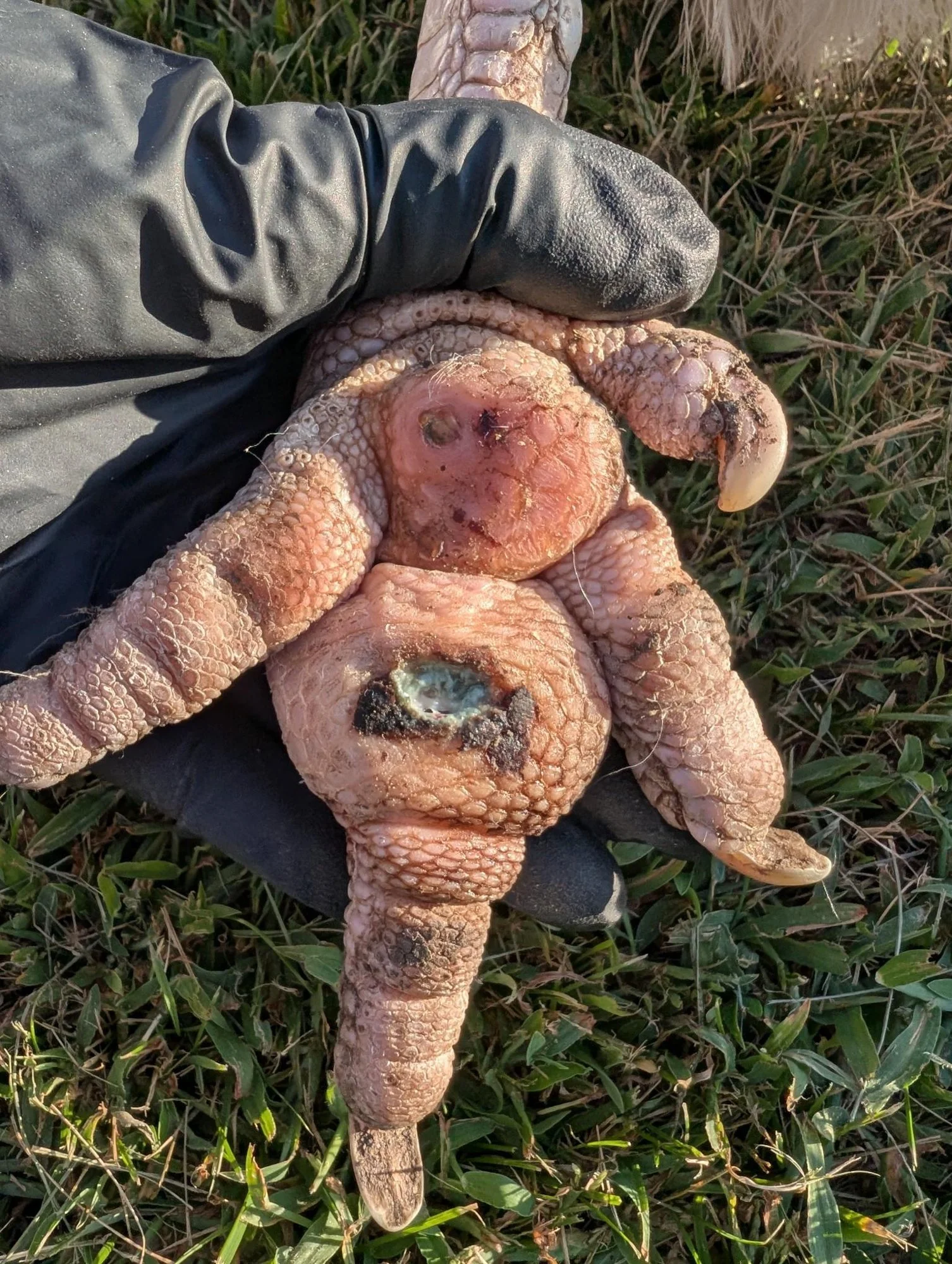
Aug 24: Turkey Bumblefoot Wound during treatment, with RediHeal
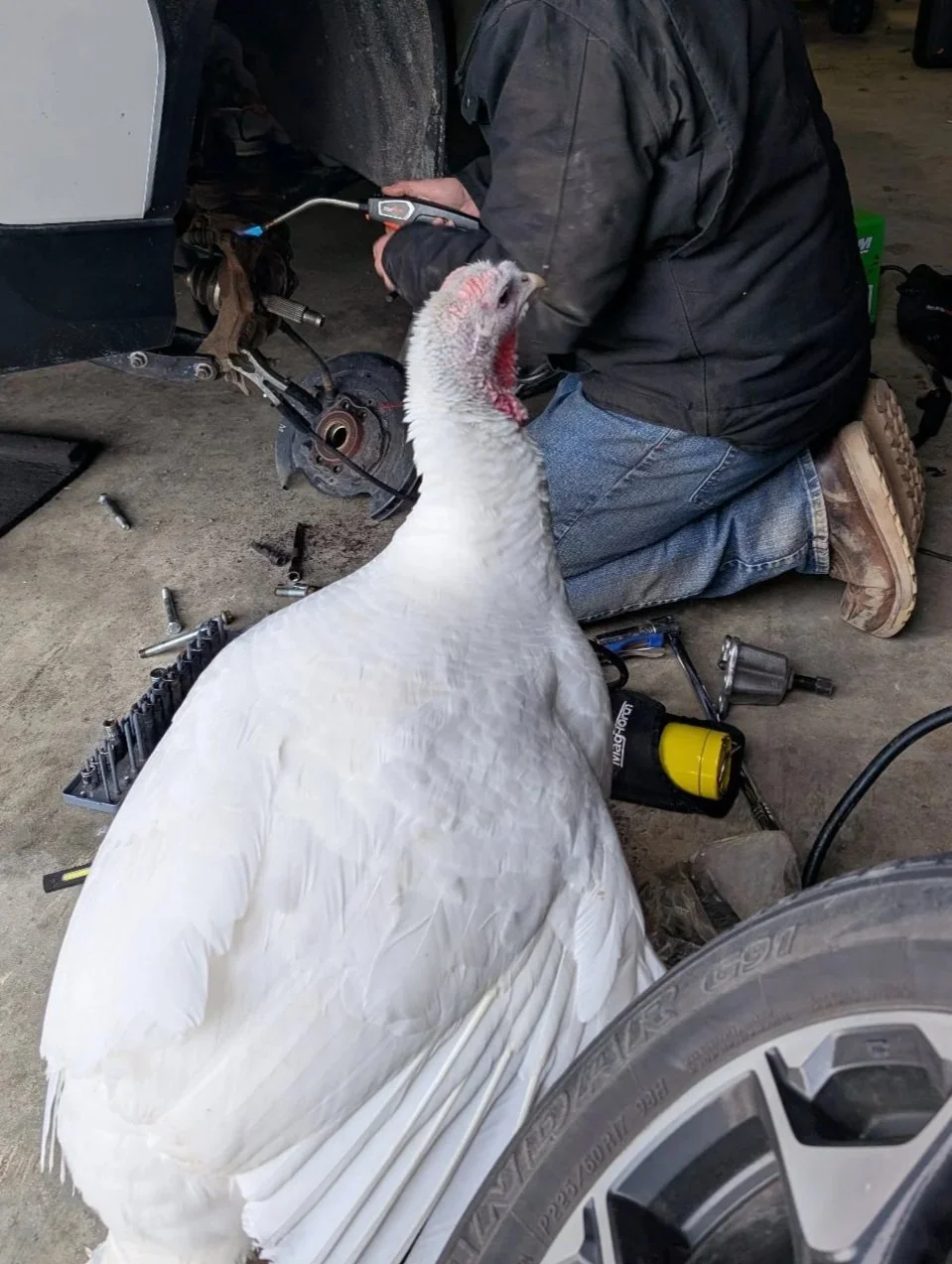
Fred Back on Her Feet and "Helping" in the Garage
The story:
Brit tells the story best:
“Fred is fabulous. Swelling is still present, but she no longer limps and is back to her normal self. Overall, the injury itself is pretty much gone. With a bird her size, keeping the wound clean was the biggest struggle outside of time management. We kept her foot wrapped for the majority of treatment. I started with checking every 1-2 days and scrubbing/debridement for a week, then we went to every 2-3 days. For about 3 weeks. Once we got to the point when I unbandaged her foot and no 'goo' came out and it was hard to probe, we started leaving the bandage off. I packed the wound every bandage change with RediHeal. I did the 'cotton candy' first then switched to ointment. Overall she did absolutely amazing."
When she checked in again with us in March 2026, Fred's bumblefoot had resolved. Some scar tissue has built up in the foot, so it still looks swollen, and in Brit's words she is "otherwise perfect as always." As for us here at Avalon - we keep a photo of her in a place of honor on our wall with a little "healed" sticker next to it.
Why this matters beyond one case:
Bumblefoot is a stubborn wound to manage because it sits on the weight-bearing surface of the foot, and a heavy bird like Fred puts real pressure on it every time she stands. Brit works in veterinary medicine for a living and still named keeping the wound clean as the hardest part of the whole case, which tells you plenty about what owners and teams are up against with poultry and pet birds.
We also want to be straight with you about the timeline. Fred's case took weeks of bandage changes, and the foot still carries some swelling from scar tissue. What changed was function. She went from a foot that needed debridement to a bird who no longer limps and is back to her normal routine, managed with a protocol a general practice can run.
You'll notice the foot photos stop in late August. We never got a final shot of the healed foot, so the outcome here comes from Brit's own follow-ups in October 2025 and March 2026, plus that last photo of Fred standing squarely on both feet supervising a brake job. We'd rather show you exactly what we have than fill the gap with something we don't.
The research points in the same direction:
RediHeal fiber and RediHeal Ointment are both made from GL1605, a borate bioactive material doped with copper and zinc. In a 2025 study published in Future Microbiology, Fakher and Westenberg compared four bioactive wound materials in the lab and found that GL1605 inhibited Staphylococcus epidermidis, Escherichia coli, and Pseudomonas aeruginosa in both free-floating and biofilm forms, an effect the authors attributed to the gradual release of copper and zinc ions. That was a bench study, and it didn't involve birds or bumblefoot specifically, so treat it as background on how the material behaves rather than proof for this case. It does help explain why a chronic, contaminated foot wound is a reasonable place to reach for RediHeal.
RediHeal is made for any animal species at any life stage, and Fred is in good company outside the mammal world. The Virginia Aquarium & Marine Science Center reported using RediHeal, alongside raw honey and other care, in the wound management of three juvenile loggerhead sea turtles injured in dredging incidents (IAAAM 2016).
The takeaway for general practice
Fred is our go-to answer when someone asks whether RediHeal works on birds, specifically bumblefoot. Her protocol was straightforward: the foot was debrided, kept wrapped, and checked every 1 to 2 days with scrubbing and debridement for the first week, then every 2 to 3 days. RediHeal fiber went in first to pack the wound, followed by RediHeal Ointment, at every bandage change. Once there was no more discharge and the wound was hard to probe, the bandage came off.
If you see backyard flocks or pet birds and you've been holding your RediHeal for the perfect case, a debrided bumblefoot lesion is a very good place to start.