
The Case:
Thanks to Dr Daniela Bernard (Oak View Seventy First Animal Hospital, NC) for these images of a 175lb mastiff case that had a foreign body on the palmar aspect of his foot with a draining tract. This case was non-healing for three weeks prior to treatment.
Testimonial:
A 175 lb Mastiff's Paw Wound Stalled for 3 Weeks. Here's Day 6 With RediHeal.
(Dr. Daniela Bernard, Oak View Seventy First Animal Hospital, NC)
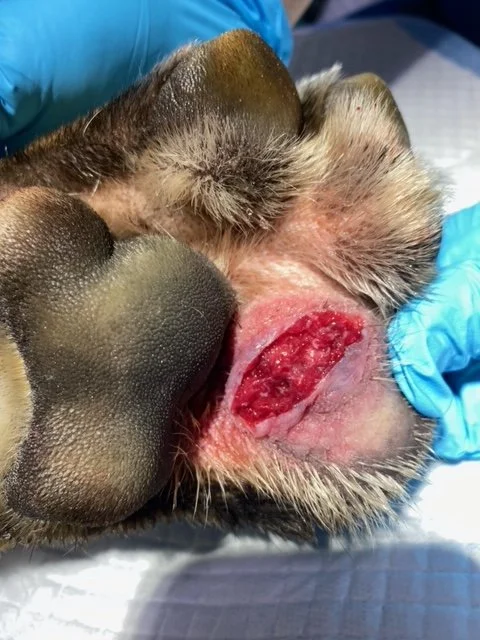
Day One Non Healing Foreign Body Wound
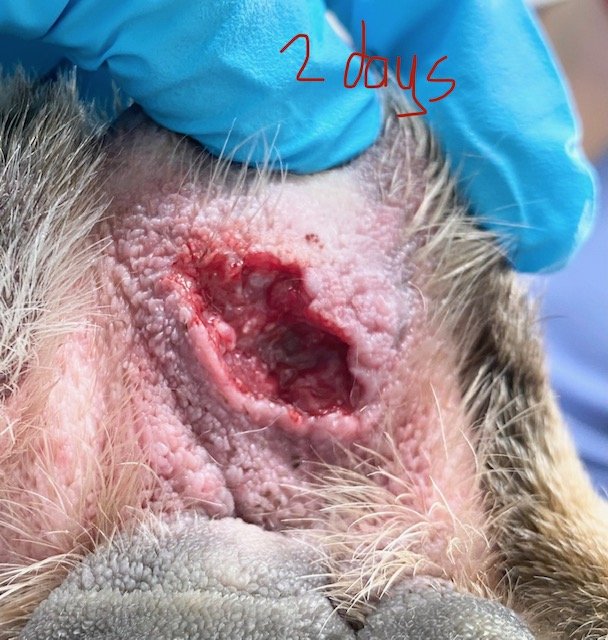
Day Three Mastiff Paw Wound
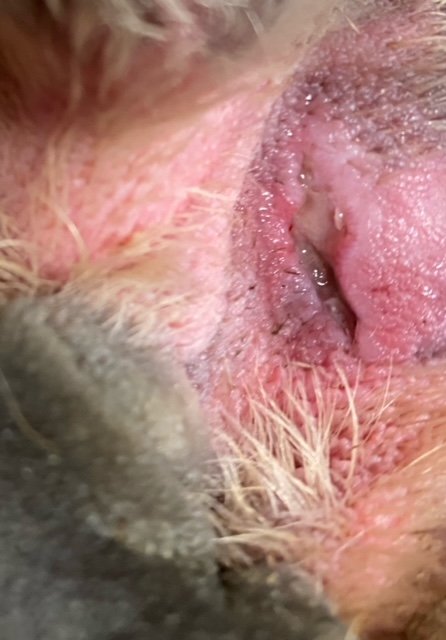
Day Six Mastiff Paw Wound
The story:
We can’t tell this story better than Dr. Bernard herself:
“The problem was the bandage was only staying for one day because the dog was getting around the e-collar. I saw it at 2 days after the initial appointment, and I was very surprised at how well it healed. It was cleaned and packed again. Once again the bandage only stayed for one day, but the foot is covered when going outside with a clean sock and bag. The third picture was three days after the second picture, and we are amazed at how well this has healed. Especially with no bandage!”
Why this matters beyond one case:
Paws are some of the hardest wounds in practice to keep covered, and this patient made that very clear. Dr. Bernard's bandage lasted one day after each packing because the dog kept getting around the e-collar, so for much of the week the wound's only protection outdoors was a clean sock and a bag. Plenty of paw cases end up managed exactly like this, with less coverage than the treatment plan called for, and Dr. Bernard watched this wound keep progressing anyway.
The research points in the same direction:
A study by Simons and Ben-Amotz, published in the Journal of Veterinary Medicine and Research in 2017, reported a mean of 4.8 days to complete granulation coverage in wounds that had previously failed to respond to treatment. This mastiff's wound had stalled for 3 weeks before RediHeal, and by the day 6 photo Dr. Bernard said she was amazed at how well it had healed. RediHeal Ointment is made from the same GL1605 bioactive glass as our fiber, milled down and suspended in a semi-occlusive base, so the same ion-release mechanism is at work in both formats. The Ointment hasn't been studied on its own yet, which makes this case one real-world data point that lines up with the published pattern, and we'd rather tell you that plainly than let you assume more.
The takeaway for general practice
Vets ask us all the time whether RediHeal works on paws, and this case gives a practical answer. The protocol was something any general practice can run, with the wound opened, flushed, debrided, and packed with RediHeal Ointment, then cleaned and repacked at day 2. If you've been holding your RediHeal for the perfect case, a stalled paw wound that won't stay bandaged is a very good place to start.